Following its world premiere at the Sarajevo Film Festival, the documentary directed by Aline Juárez and Juan Francisco Donoso is developing a strategy that combines its international circulation with community screenings, spaces for discussion and activities in different territories. Its next stop will be Sofia DocuMental in Bulgaria on 29 September.
Continuing to build connections and conversations after each screening is at the heart of the impact campaign for All We Have Is Us, a documentary directed by Aline Juárez and Juan Francisco Donoso that connects the experiences of communities in Chile and Serbia around lithium mining.
The film follows people and organisations in the Atacama Desert and the Jadar Valley over five years, two distant territories that form an alliance around shared challenges. As Rio Tinto pushes forward with lithium extraction in Chile and Serbia, two organisations forge an unexpected transcontinental alliance, connecting deserts and valleys in a shared struggle to defend their lands and democracy in the face of expanding energy and military interests.
The transcontinental connection at the heart of the documentary now extends to its impact strategy. The campaign combines festival circulation with community screenings, academic film forums and educational workshops in Chile, Serbia and Portugal, as well as activities in spaces connected to decision-making in Europe. Its aim is to use the film as a starting point for conversations about critical raw materials, Indigenous rights and environmental justice, while bringing together communities and organisations from different countries.
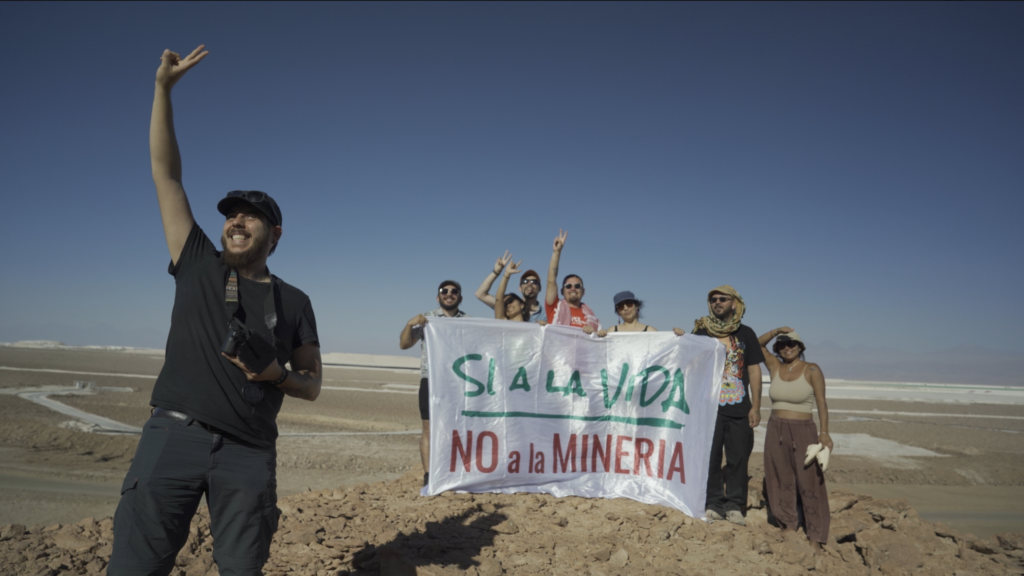
“The impact campaign is based on the conviction that communities in sacrifice zones do not need anyone to come and ‘create’ a movement for them: their structures for defending their territories, water sovereignty and community memory already exist and have been resisting for years. Our role as a documentary is to support this network, acting as a transcontinental bridge that shows the connections between the struggles of the Atacama Desert and those of the Jadar Valley in Serbia and Europe,” explain Aline Juárez and Juan Francisco Donoso.
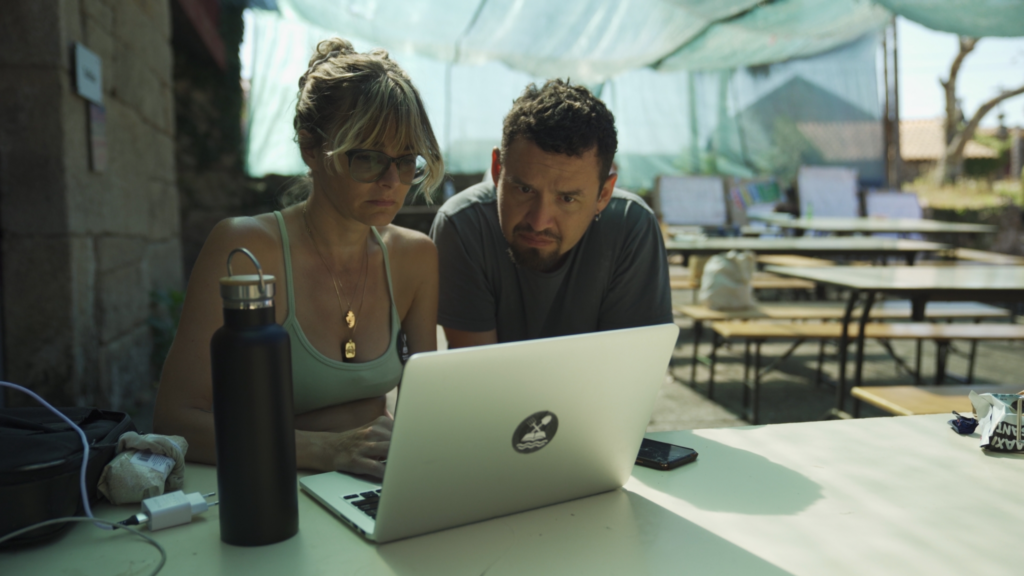
The connection between the two places began to take shape during the making of the film. In 2021, the team encountered experiences developed in San Pedro de Atacama and later in Belén, in the Chilean Altiplano, as well as the connections that Ramón Balcázar — researcher, photographer and member of the Andean Wetlands Alliance — and the production team had established with communities in Serbia. Over the following years, these networks made it possible to connect participants from both countries and, in 2023, members from Chile and Serbia met in Portugal, where they consolidated an alliance known as the Jadar Declaration.
From International Circulation to New Spaces for Connection
The campaign accompanies an international trajectory that began during the project’s development. All We Have Is Us participated in industry events including DOK Leipzig, the European Film Market, DocsBarcelona and Beldocs, among others. Along the way, it received the Best Impact Pitch at Dokumentale 2024 and the HBO Europe Best Pitch Award at DocsBarcelona 2025.
In 2026, the film had its world premiere at the Sarajevo Film Festival as the main title of Human Rights Day. Its circulation strategy for the coming years seeks to combine its presence at festivals and other international exhibition opportunities with an impact campaign aimed at communities, socio-environmental organisations, educational spaces, decision-makers and companies, particularly those working in sustainable mobility. The campaign will focus on Europe and South America.
“We want the film to be a concrete tool for questioning the real costs of the corporate energy transition, while also recognising that these minerals are being used for digitalisation and militarisation under a national security agenda. The idea is to open spaces for meaningful political debate and strengthen alliances between Indigenous peoples, rural communities and socio-environmental organisations around the world,” say Juárez and Donoso.
The next stop in the film’s international circulation will be Sofia DocuMental in Bulgaria. All We Have Is Us will be part of the official programme of the Human Rights section and will screen on 29 September at 8:15 p.m. at Cinema Odeon in Sofia. The in-person screening will be followed by a conversation with members of the filmmaking team.
In this way, the international circulation of All We Have Is Us seeks to extend the documentary experience beyond each screening, using screenings and related activities as spaces to connect experiences, open up conversations and strengthen networks among communities facing socio-environmental challenges in different parts of the world.
internacional@chiledoc.cl
@copyright Corporación Chilena del Documental CCDoc