● “Festivals: The Last Refuge of Documentary?” was one of the free, open-to-the-public panels held during the tenth edition of Conecta. It offered an important space for conversation and debate between two international festival programmers: Ana Alice de Morais from RIDM (Canada) and Eric Derwael from the Millennium Festival (Belgium). The discussion was moderated by Claudio Pereira, Director of FICViña.
● Among the ideas that emerged, the panelists emphasized that although streaming and the proliferation of screens are still seen as a threat to documentary circulation, funding cuts, global political conflicts, and the prevailing Eurocentrism in curation are currently the main challenges.
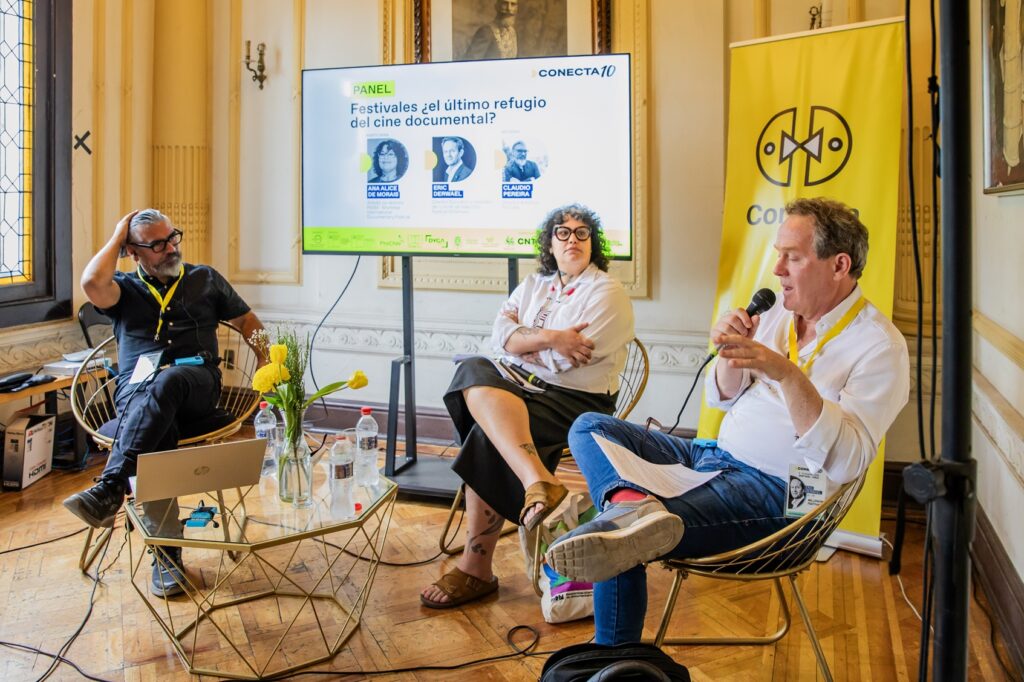
From December 9 to 12, the International Documentary Industry Meeting Conecta—the most important event of its kind in Chile—celebrated its tenth anniversary, consolidating itself as the main meeting point for the Latin American documentary industry. It is a key space for documentary projects in development and for network-building within the sector, as well as a forum for meaningful conversations around relevant and timely issues for the industry.
The panel held on Thursday, December 11 featured Ana Alice de Morais, Co–Artistic Director of the Montreal International Documentary Festival RIDM (Canada); Eric Derwael, Executive Director and Member of the Selection Committee of Belgium’s Millennium Festival; and Claudio Pereira, Artistic Director of the Viña del Mar International Film Festival FICViña (Chile), who moderated the discussion. After a brief introduction, he posed the central question:
In this regard, Ana Alice de Morais noted that a shift is taking place—albeit slowly—in the operating models of many festivals in the Northern Hemisphere. “Part of this change has to do with the arrival of new people on curatorial teams, especially individuals from the Global South,” she stated, adding that “most major European festivals continue to have a Eurocentric, predominantly white perspective. This affects which films circulate globally. Major festivals such as Cannes, Venice, or Berlin end up dictating which films are later screened at other festivals, even in Latin America. That is also a form of colonization of the gaze. For that reason, I hope festivals are not the only refuge for documentary cinema. We need many refuges for an enormous and diverse body of work.”
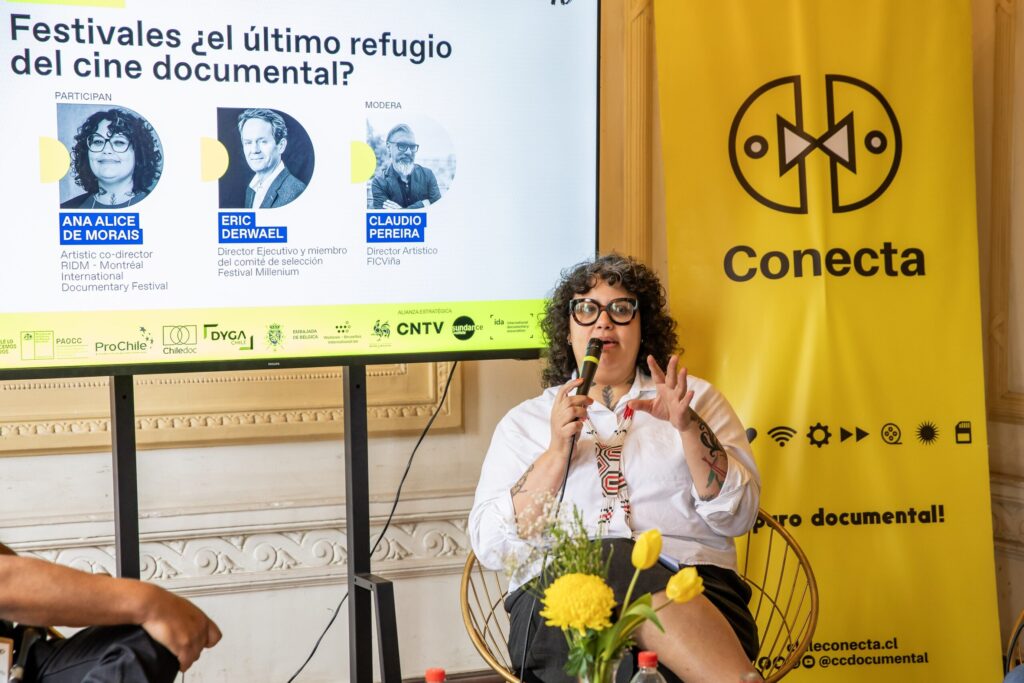
Eric Derwael agreed, stating that “the shift in perspective is slow. Also, building a festival and an audience takes years. The pandemic was a very difficult moment: we lost viewers and it was hard to win them back. Today we compete with multiple platforms and different consumption habits. Festivals must adapt, but without losing their identity.”
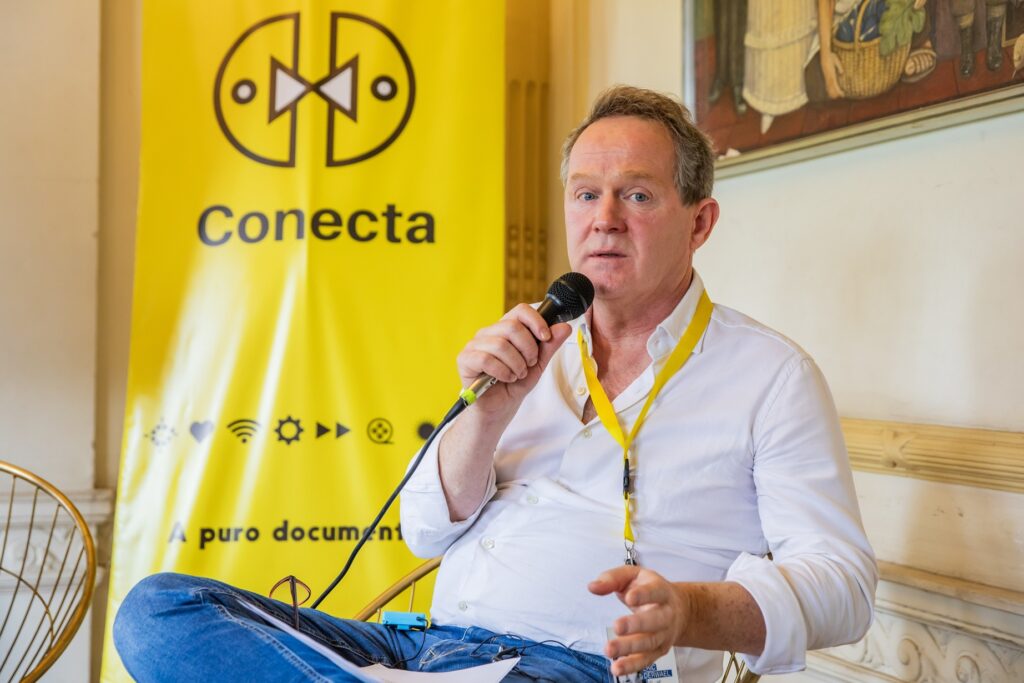
But what kinds of narratives tend to dominate festivals? How can repetition and the hegemony of certain voices be avoided? According to Eric Derwael, the Millennium Festival receives more than 500 films each year, from which they select 40. “We try to find films that aren’t everywhere, to discover new and singular works, even though we know the system pushes us to repeat certain award-winning titles,” he explained. Meanwhile, Ana Alice de Morais noted that RIDM has three curators who collectively watch all the films submitted through the open call. “For us, the subject matter of the film is not what matters most, but rather the voice speaking. We don’t work with fixed thematic axes. We look for authenticity, necessity, and urgency in the creative gesture—and, in addition, to decolonize the gaze of the programming team.”
Regarding the major question of how to reach audiences in this context of hyperstimulation, Ana Alice explained that “RIDM is nearly 30 years old and has a loyal audience that actually grew after the pandemic. The festival is a meeting place, not just an exhibition space. We have developed various strategies to attract younger audiences: working with schools, a youth jury, and programs dedicated to new generations. We do a great deal of mediation work.”
Challenges
Both professionals agreed that funding is one of the greatest challenges. “Finding a balance between public and private funding is key. In Europe, the rise of the far right puts cultural support at risk. Cinema is also an economic activity, and we must know how to defend it on that level,” said Eric Derwael.
“In Canada, we depend on public and private funds. In an increasingly conservative context, many private sponsors are pulling out. We lost support from major platforms like Netflix or Warner for political reasons. Another challenge is human: small teams, excessive workloads, constant burnout. This also affects diversity, because very few people are watching a huge number of films,” Ana Alice de Morais concluded.
You can watch the full panel on Conecta’s YouTube channel.

internacional@chiledoc.cl
@copyright Corporación Chilena del Documental CCDoc