● Directors of key spaces in the documentary industry—Nadja Tennstedt from DOK Leipzig, Patrizia Mancini from Sheffield DocFest, Sean Flynn from the Points North Institute, and Diego Pino from the Encuentro Internacional de Industria Documental Conecta—analyze the challenges of financing, distribution, and audiences that documentary filmmaking faces in today’s global landscape.
● In conversation with Chiledoc, they shared their reflections on an ecosystem in the midst of redefinition, where the sustainability of documentary filmmaking will depend both on new forms of financing and on the ability to build communities, networks, and innovative distribution models.
We reached out to representatives from leading documentary industry platforms to learn about their perceptions and reflections on changes in funding models, distribution, and relationships with audiences in the current context. In a landscape shaped by technological transformations and new circulation dynamics, they agree on the need to strengthen international collaboration in order to sustain independent documentary filmmaking.

One of the most visible shifts concerns film distribution and the growing difficulty for independent documentaries to find sustainable exhibition channels. From Europe, Nadja Tennstedt, Director of DOK Industry at DOK Leipzig, notes that the circulation of this type of work has become more complex in recent years.
“Screenings of independent documentaries at festivals often attract large audiences, but they no longer guarantee quick distribution deals,” she explains.
According to Tennstedt, even when a professional distributor is involved, filmmakers themselves end up taking on much of the outreach and promotion work. “Documentary releases often depend heavily on filmmakers driving partnerships and audience engagement, often with limited financial compensation.”
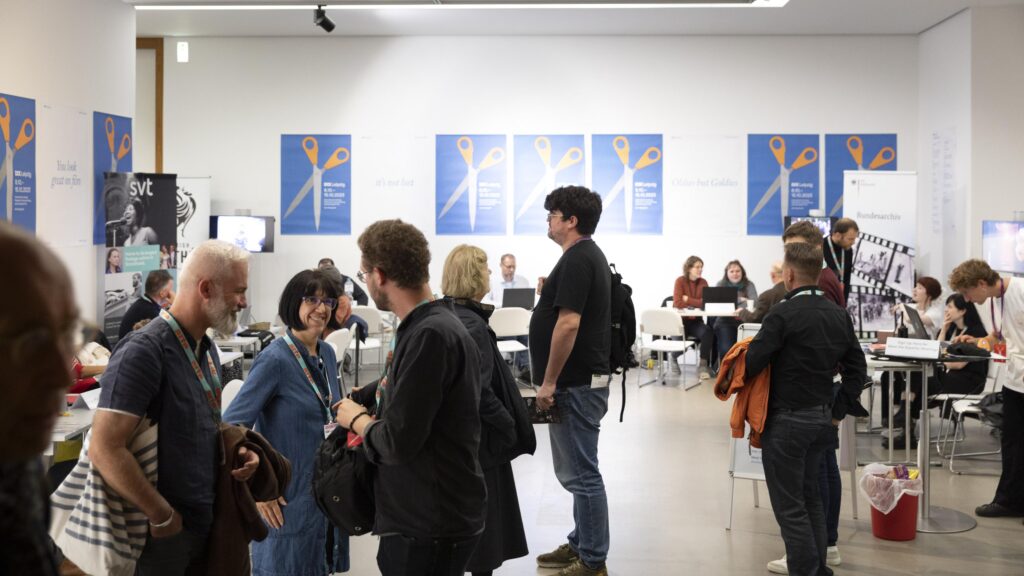
In this context, she also highlights the potential of community screening spaces, where films can foster moments of encounter and conversation. These environments, she says, enable “reflection and dialogue” and help strengthen the connection between documentary cinema and its audiences.
A saturated and fragmented market
For Patrizia Mancini, Director of Industry at Sheffield DocFest, the documentary field is also facing a phenomenon of content saturation.
“Too many documentaries are being produced that cannot be absorbed by the distribution channels currently available,” she notes.
This situation, she explains, particularly affects independent productions with fewer resources, which must compete in an increasingly fragmented market.

At the same time, Mancini emphasizes that “markets and industry events have evolved into more complex and innovative spaces that promote exchange and collaboration.” Today, they function as “key forums for networking, co-production, and professional development,” where “producers and filmmakers combine traditional strategies with new ways of engaging global platforms and international partners.”
A paradigm shift in the industry
From the United States, Sean Flynn, Artistic Director of the Points North Institute, agrees that the industry is undergoing a structural transformation.
In his view, the traditional distribution infrastructure is changing faster than the sector has been able to adapt.
“In the United States, this translates into strong consolidation among commercial platforms, with major companies merging and reducing opportunities for independent documentary,” he says.
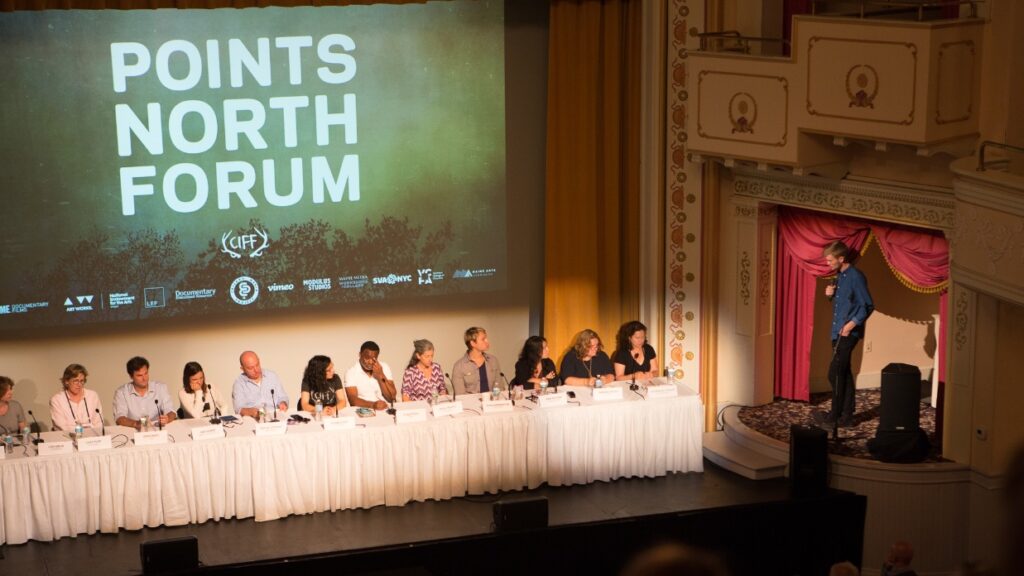
This concentration, he adds, has led to greater risk aversion, favoring content seen as more profitable—such as true crime or celebrity stories—over more personal and auteur-driven projects.
The result is a paradoxical scenario: “many high-quality films are still being made, but there are fewer resources to finance them and fewer viable channels for them to reach audiences.”
For Flynn, this moment also opens the door to new strategies. “We are living through a real paradigm shift. The traditional model is weakening faster than new alternatives are emerging, creating uncertainty but also opening space for experimentation.”
Reconnecting with audiences
In Latin America, Diego Pino Anguita, Director of the Encuentro Internacional de Industria Documental Conecta, stresses that one of the major challenges today is rebuilding the relationship between films and their audiences.
“The independent audiovisual industry faces the challenge of deeply rethinking how it communicates with audiences,” he states.
For Pino, documentary retains a unique potential as a “space for social encounter.” He adds that “in a media ecosystem that often privileges anger and polarization, documentary can once again become a space for encounter, reflection, and empathy.”
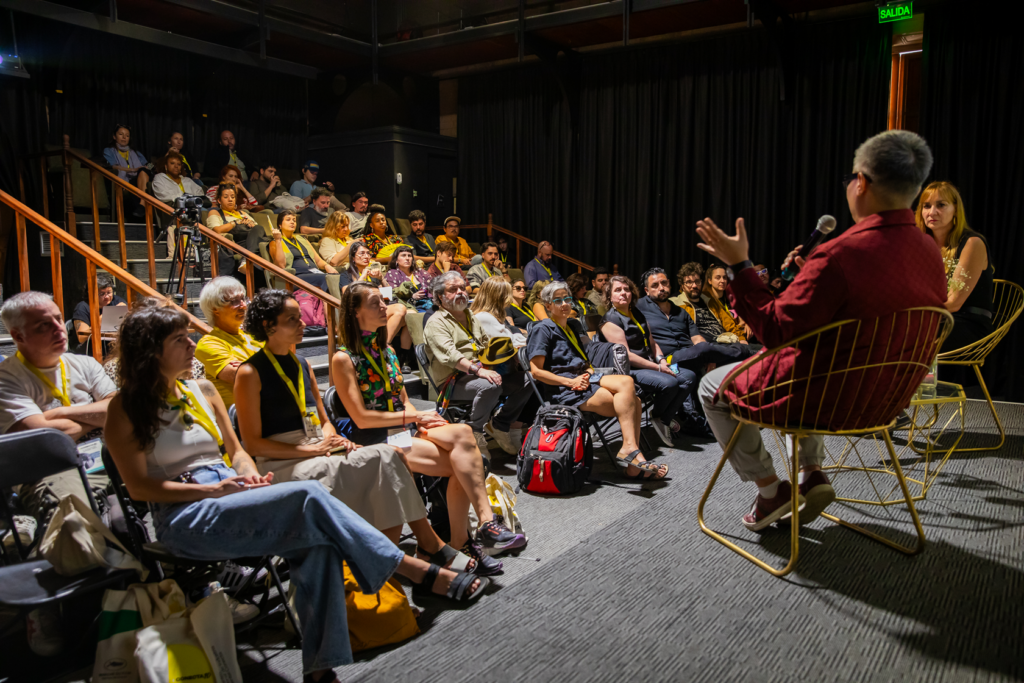
In this context, he also highlights the importance of strengthening international collaboration networks: “Today more than ever, it is essential to build international alliances, foster co-production, and strengthen networks. Seeking partners and co-creators is not just a necessity—it is a long-term strategy.”
Collaboration as the key to the future
Despite the uncertainties facing the sector, all four voices agree that the future of documentary will largely depend on the industry’s ability to adapt, innovate, and work collectively.
In an increasingly complex and competitive audiovisual ecosystem, international collaboration, experimentation with new distribution models, and the strengthening of communities around films emerge as central elements for the development of documentary in the years ahead.
All four interviewees also agree that, now more than ever, the challenge will be to continue creating stories capable of engaging contemporary audiences and opening spaces for reflection in a world marked by profound change and polarization.

internacional@chiledoc.cl
@copyright Corporación Chilena del Documental CCDoc